

Stress Awareness: CIPD Survey Report – Managing Health & Wellbeing at Work
Key Findings – Managing Stress and Mental Health
The findings highlight a clear need for stronger organisational action to address the root causes of workplace stress. High workloads and ill health continue to be among the most significant drivers, suggesting that many employees are struggling to balance job demands with their overall wellbeing.
In the 12 months prior to the survey, 64% of respondents reported stress-related absence within their organisation. The issue is particularly pronounced in the public sector, where 84% of organisations reported stress-related absence, compared with 71% of large private-sector organisations (those with 250+ employees). This indicates that while stress is widespread across sectors, its impact may be more acute in certain working environments.
Stress is not driven solely by workplace pressures. 57% of organisations reported that at least one of the top three causes of stress was linked to non-work factors, including personal health issues, relationship challenges, or financial concerns. While employers cannot control these external influences, they can play an important role in reducing their impact by creating supportive policies, accessible resources, and a workplace culture that encourages open dialogue about wellbeing.
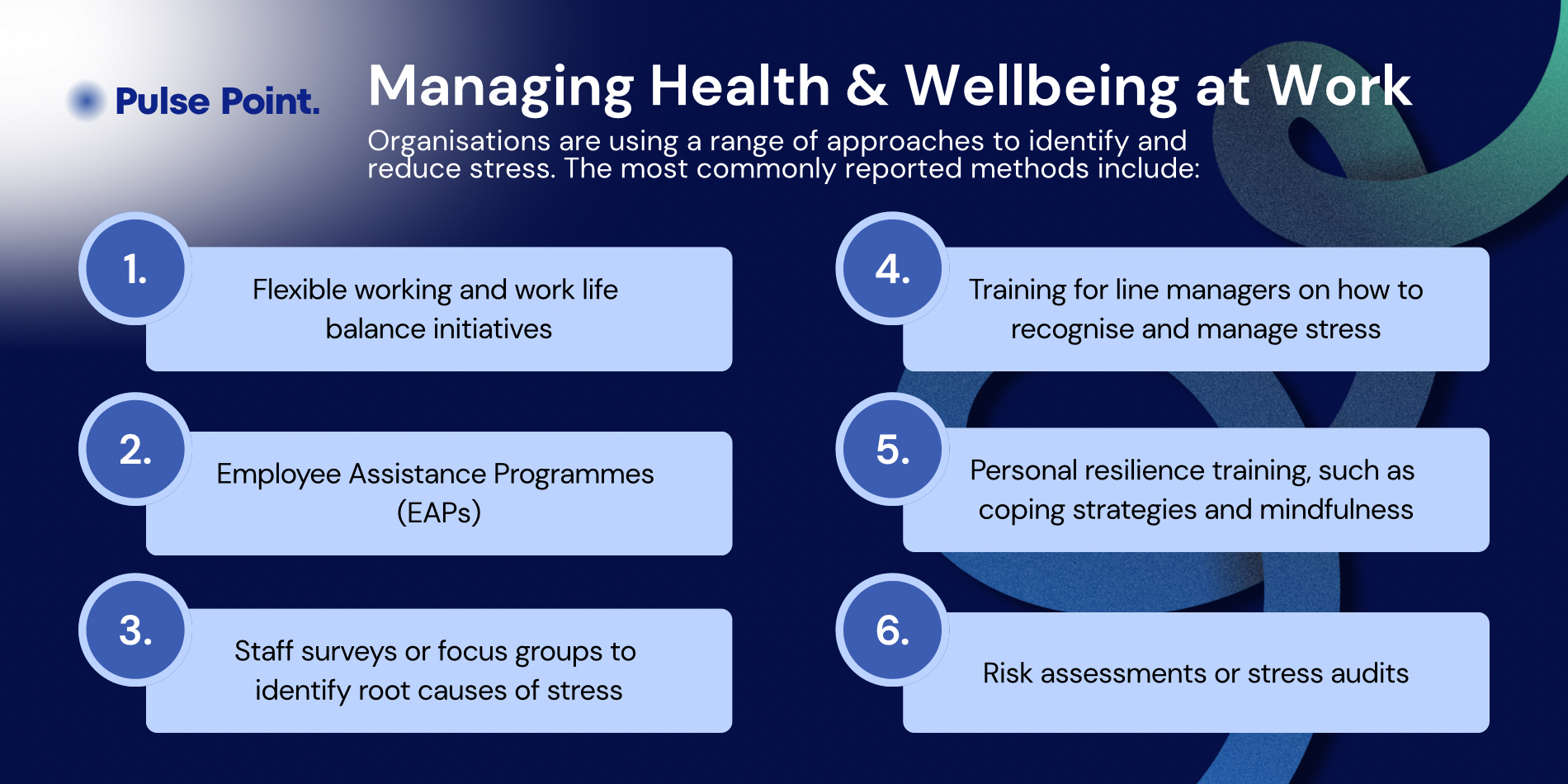
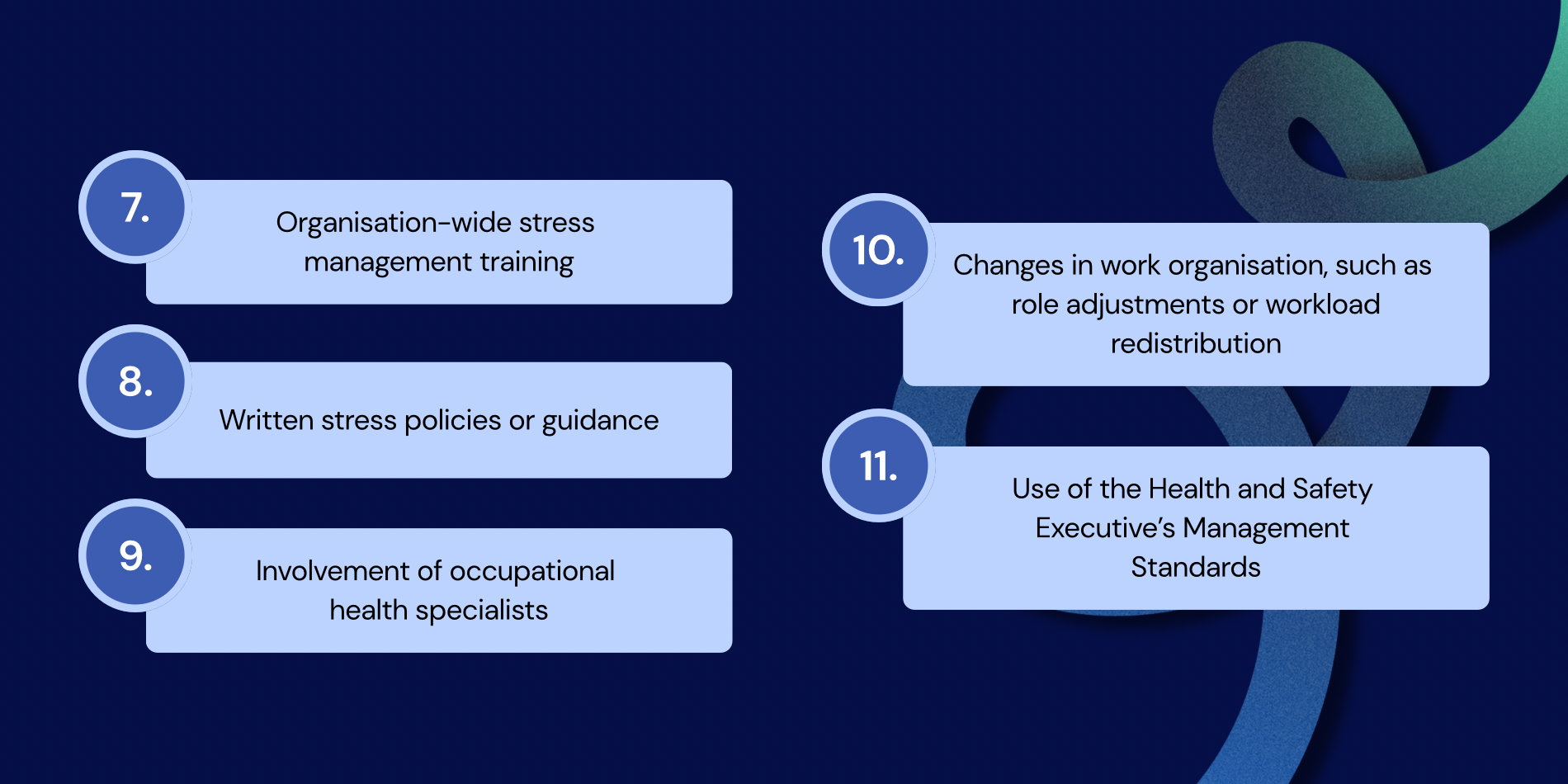
Providing support when an employee becomes unwell is essential. However, organisations are increasingly recognising the importance of proactive approaches that promote positive mental health and psychological safety across the workforce. Early intervention plays a critical role in preventing issues from escalating and supporting employees before stress leads to absence or longer-term health concerns.
The survey also suggests a positive shift in leadership attitudes. Senior leaders and managers are becoming more supportive of initiatives that promote employee mental health. This is reflected in employee responses, with many indicating that wellbeing is now more clearly on the senior leadership agenda.
Summary
Workplace stress remains a significant challenge, driven by both work-related pressures and personal factors outside the workplace. While many organisations are providing support once issues arise, there is growing recognition of the need for earlier and more preventative action. Strengthening leadership commitment, improving workplace practices, and embedding proactive wellbeing strategies can help organisations create healthier, more resilient work environments.
Learn more about Pulse Point: Your organisation’s checkpoint for mental wellbeing.
References Sinclair, A. and Suff, R. (2025) Health and wellbeing at work. London: Chartered
Institute of Personnel and Development.


.png)