
Blog 1: How Mental Health Impacts Employee Performance
When we talk about workplace performance, the conversation often focuses on targets, productivity, skills and resources.
But there is another factor that can have a significant impact on how people perform: mental health.
An employee who is struggling with stress, anxiety, burnout or poor wellbeing may still be turning up to work and meeting their basic responsibilities. On the surface, everything can appear fine.
But beneath that, performance can be affected in ways that are harder to see.
The hidden impact of poor mental health at work
Mental health doesn't sit separately from performance. When people are struggling, it can affect concentration, motivation, confidence, decision making and relationships with colleagues.
This can lead to:
➢Reduced productivity and focus
➢Increased mistakes and rework
➢Difficulty in decision making
➢Lower engagement and motivation
➢Increased conflict or withdrawal
➢More frequent absence
➢Presenteeism; being at work but not functioning at full capacity
The challenge for organisations is that these outcomes don't always look like a mental health issue.
A drop in performance might be attributed to capability. Increased absence might be treated as an attendance issue. Someone becoming disengaged might simply be viewed as lacking motivation.
Without understanding what is happening beneath the surface, organisations can end up addressing the symptoms rather than the cause.
Stress is an organisational issue, not simply an individual one
Workplace stress is often discussed as something employees need to manage themselves.
But organisations have a significant influence on the conditions that create or reduce stress.
Heavy workloads, unrealistic expectations, poor communication, lack of control, organisational change, difficult relationships and ineffective management can all contribute to poor mental wellbeing.
This is why simply offering wellbeing initiatives or encouraging employees to "look after themselves" isn't enough.
Organisations need to understand what is creating pressure in the first place.
The cost of ignoring the warning signs
When mental health problems are left unaddressed, the impact can extend well beyond the individual.
For organisations, the consequences can include increased absence, reduced productivity, recruitment and retention challenges, lower engagement and greater pressure on managers and teams.
There is also a less visible cost.
When people are struggling, colleagues may have to absorb additional workloads. Managers spend more time managing issues reactively. Teams can become stretched, morale can decline and performance can suffer further.
It can become a cycle.
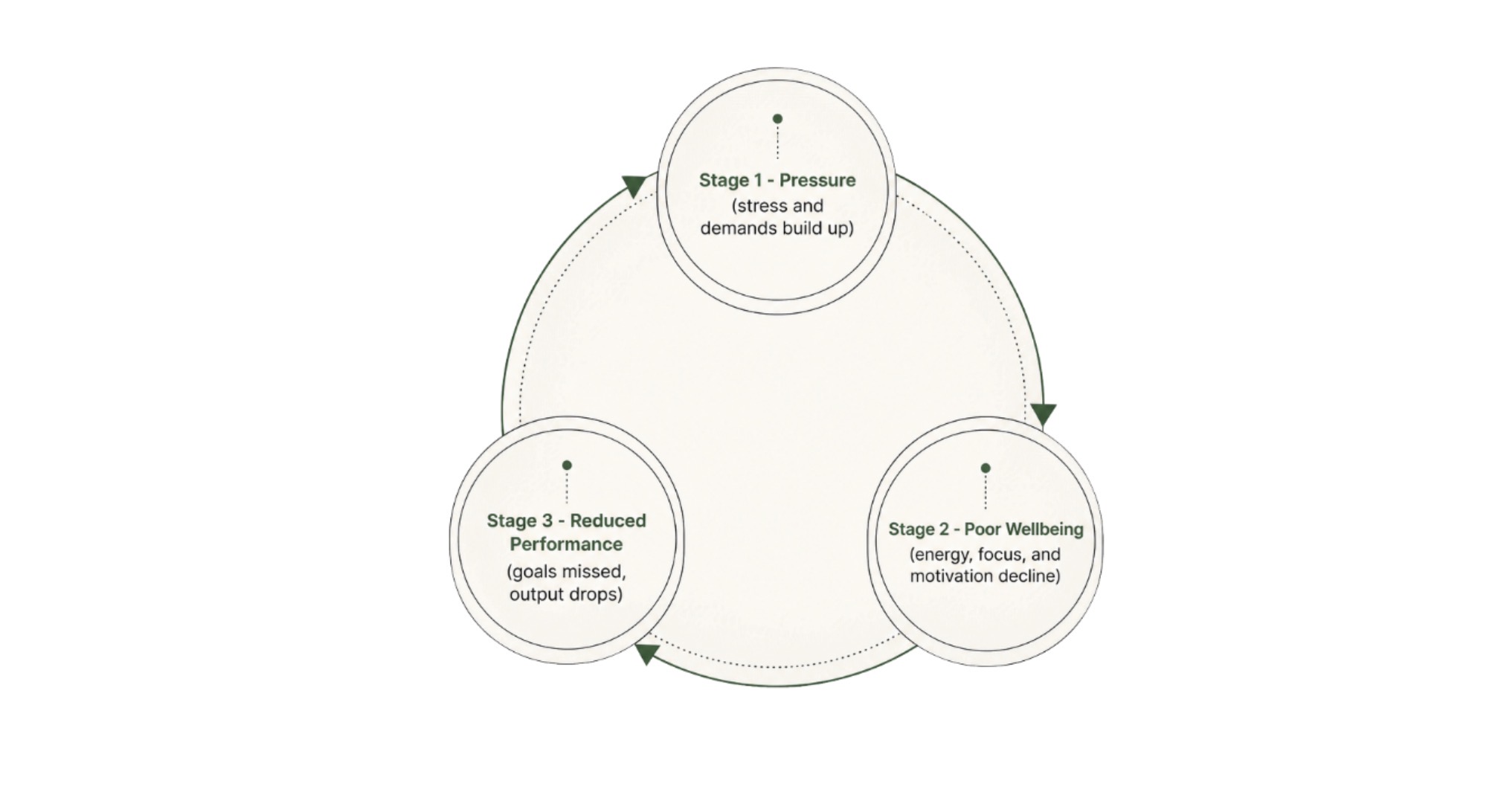
Breaking that cycle requires organisations to understand where the pressure is coming from and what can realistically be changed.
From reacting to preventing
The most effective approach isn't simply responding when someone reaches crisis point. It is identifying organisational risks and emerging issues early.
That means looking beyond traditional measures such as absence and employee assistance programme usage and asking broader questions:
➢Are our people experiencing manageable levels of pressure?
➢Do employees feel supported by their managers?
➢Are workloads realistic?
➢Are leaders aware of the issues employees are experiencing?
➢Are our wellbeing initiatives really addressing the issues that matter?
These questions help move the conversation from "How many people are struggling?" to "What is happening within our organisation that could be contributing to this?"
Measuring the effectiveness of your approach
Every organisation says employee wellbeing is important. But intention isn't the same as impact.
The real question is: How effectively is your organisation supporting the mental health and wellbeing of its people?
At Pulse Point, we help organisations answer that question.
Our organisational assessment looks beyond individual wellbeing to understand how effectively mental health and wellbeing are embedded across the organisation. It identifies strengths, highlights gaps and provides leaders with insight into where action could make the greatest difference.
Because improving employee performance isn't simply about asking people to do more.
It starts with creating the conditions in which people can perform at their best.
Better wellbeing. Better performance. A healthier organisation.





.png)